The AI security field is chasing one thing, and that thing is speed. Faster triage, faster verdicts, claims of hours collapsed into minutes. Juno is one of the fastest AI in that race. But speed alone is half the answer. A good analyst is both fast and right. So along with speed, we simultaneously made another equally important bet: answers you can trust and are structurally correct by construction. We've been calling the quality behind that bet attunement, an AI analyst that orients itself to your environment, no matter where your data is, and reasons inside it, instead of showing up as a stranger.
Ontology is how it comes to understand your environment, deeply enough that the answers it builds on top can be trusted. Because trust is not about the answer. It's about the data the answer was built from.
Where hallucination comes from
Security data is sprawling and unstructured. Hundreds of tables across SIEMs, EDRs, cloud logs, and data lakes, each with its own schema, naming conventions, and quirks that whoever built the environment never wrote down. When a typical AI agent investigates an alert, it has to work all of this out at the moment you ask. That guesswork is the first point of hallucination.
The second point is the prerequisite. Most vendors want you to normalize your data into a predefined schema first, usually OCSF, so their AI has a surface to reason over. While it sounds fine in theory, in practice, it's a multi-year data engineering project: re-piping every source and paying to store a second copy of your telemetry. And barring that, even if you do the work, whatever doesn't fit the predefined schema gets flattened or renamed on the way in. The AI never knows it's gone, because all it ever sees is the clean copy. Every answer rests on data filtered through a translation layer.
Understanding the environment before the question
An ontology is just a map of what your data is and how it connects. Plenty of vendors build one, and the idea isn't novel. What's worth looking at is how Juno builds it, because that's where it diverges from everyone else, and where the trust comes from.
Juno doesn't translate your data. It reads it where it lives, in its native shape, and builds its understanding from what's actually there, not from a reshaped copy of it. Nothing gets flattened to fit a schema, because there's no pre-existing schema to fit. The messy, vendor-specific detail that a translation would have dropped is what Juno keeps.
So before any investigation runs, Juno builds an ontology of your environment, mapping the shape and purpose of every table, the entities that connect them, the hosts, users, processes, and identities, and how one source links to the next. It's built once and reused, so Juno doesn't rediscover your data model on every question. It already knows it.
The way that model gets built is the point, because that's where the trust lives. A model is only as sound as the steps that made it, so three of those steps are worth dwelling on.
1. It judges tables by evidence, not by their names.
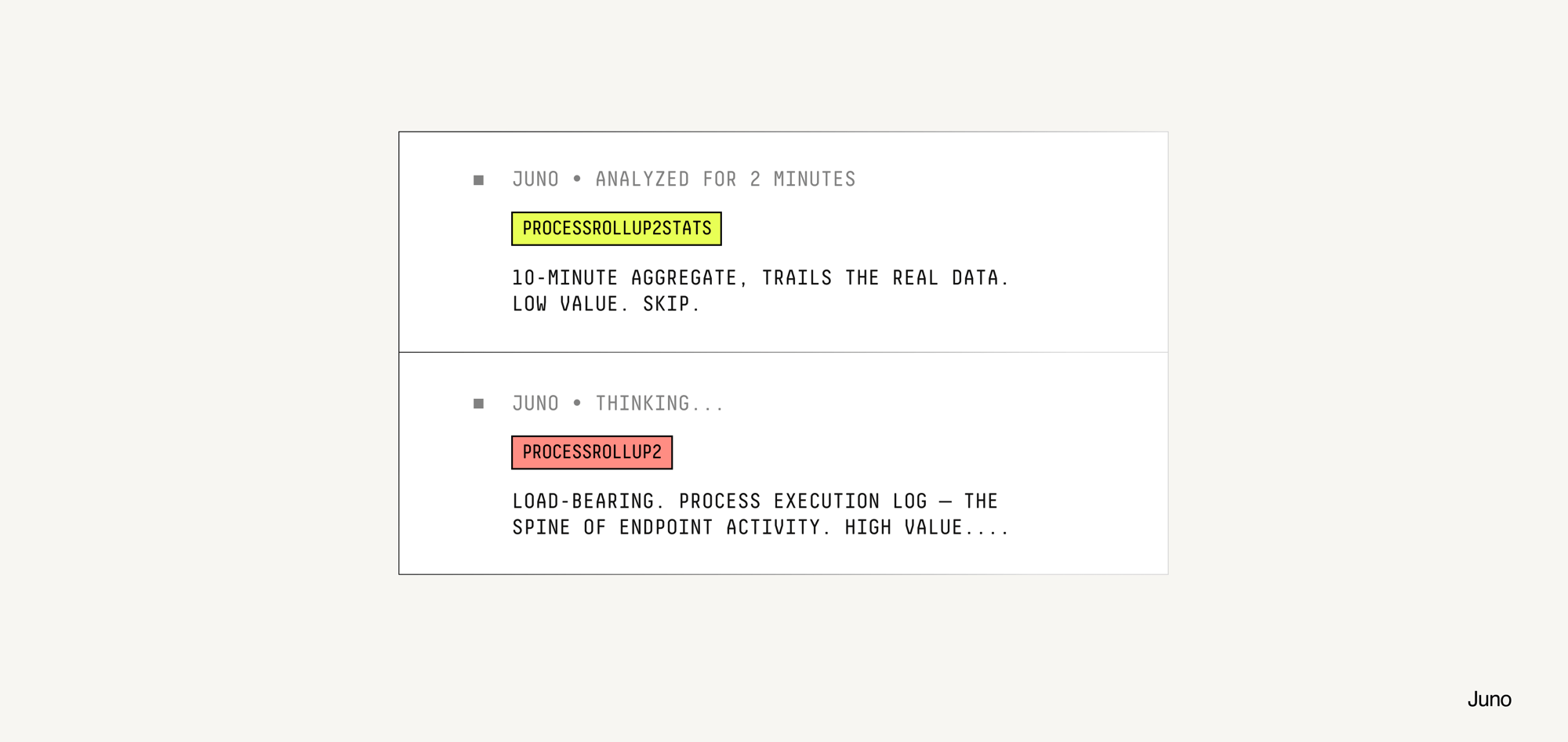
Juno doesn't trust a table's name to tell it what the table holds. In a CrowdStrike feed, the record an investigation most often pivots on is called ProcessRollup2, the log of process executions on a host. Nothing in that name says "this is the spine of endpoint activity," and a near-twin sitting beside it, ProcessRollup2Stats, is only a ten-minute aggregate that trails the real thing. Read the labels alone and you can't tell the load-bearing table from the footnote. So Juno reads the actual structure, the columns, the shape, and samples the data inside to confirm what's really there. A name is a claim, and Juno checks the claim.
2. It separates the load-bearing tables from the rest.
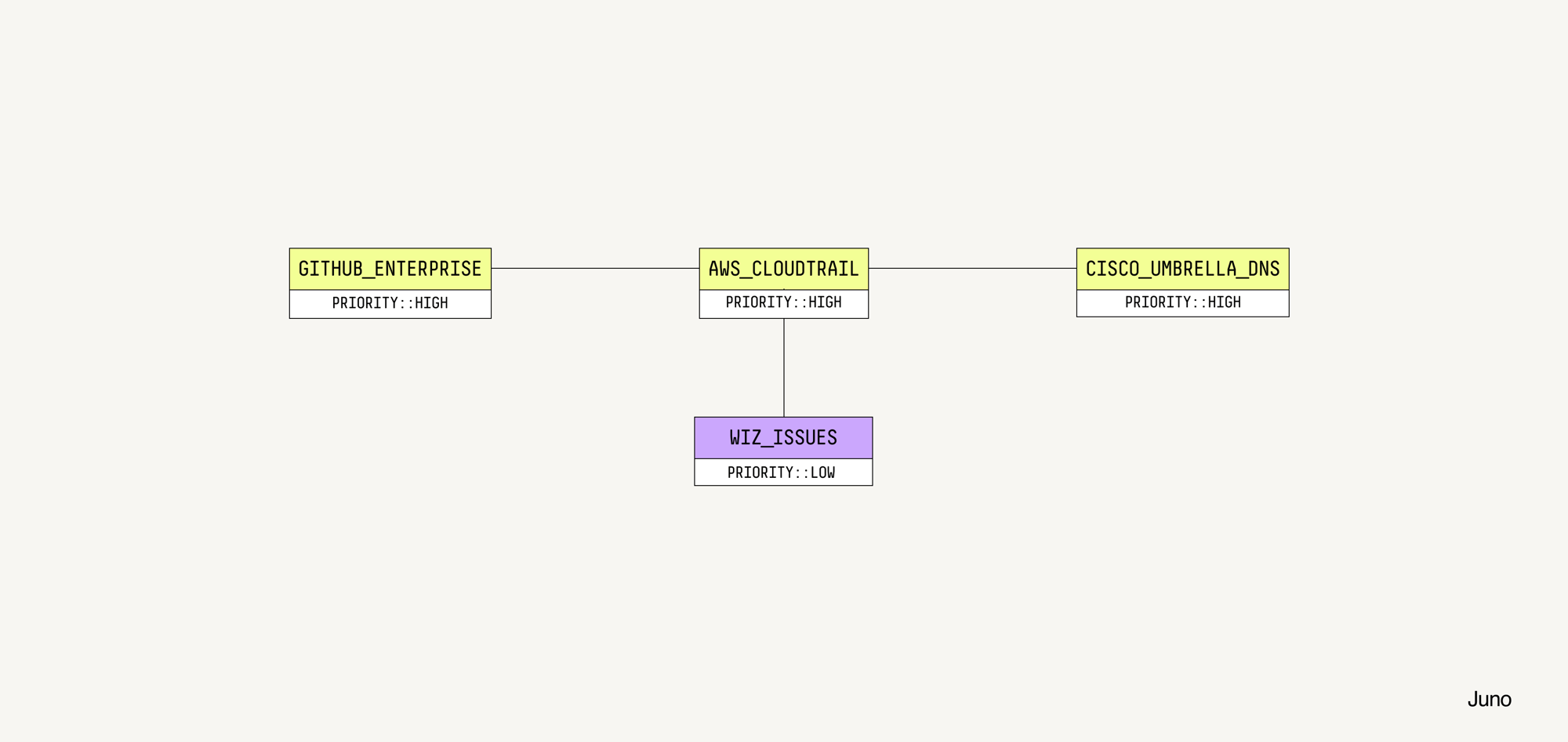
As it maps your environment, Juno classifies every table by value, from low-signal informational data up to high, based on its structure and how it relates to everything around it. Most data models tell an agent which joins are legal. Juno also works out which tables are actually worth pivoting on. Knowing a join is possible is not the same as knowing that it's important.
3. It notices when your data model shifts.
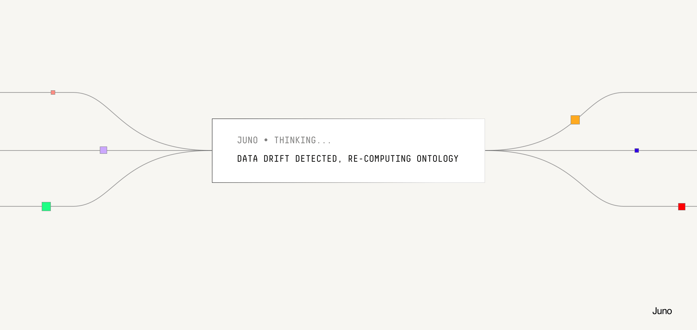
Environments change. Tables get added, dropped, restructured. A pre-computed model that never gets updated would slowly drift away from reality, which is the obvious objection to building one at all. So Juno re-analyzes on a regular cadence, catching what's changed and refreshing its understanding. The model stays attuned as the environment moves.
Trust you can check, not take on faith
An analyst who doesn't know your environment guesses. An analyst who does, doesn't. So every relationship and every value-grade is something Juno computed and can show you. The understanding isn't a black box you're asked to accept. It's inspectable, the same glass-box principle that runs through everything Juno does. The foundation under each finding was built and checked in advance, so the answer rests on something real rather than something guessed. Structurally correct by construction, and verifiable when you need it to be.
Zero config, by design
You don't set the ontology up separately. You add a data-lake connector, and Juno starts mapping in the background. No semantic model to hand-author, no relationships to define, no configuration at all. The understanding builds itself and keeps itself current.