What is CSPM?
As more organizations shift their workloads to the cloud, securing these environments becomes increasingly critical. Cloud misconfigurations, such as exposed storage buckets or improper access controls, can create significant vulnerabilities and increase the risk of data breaches.
Cloud Security Posture Management, or CSPM, helps organizations continuously identify misconfigurations, compliance violations, and security risks across their cloud infrastructure. CSPM solutions provide visibility and actionable insights that help teams strengthen cloud configurations before risks escalate.
In this guide, we’ll explore what CSPM is, its key capabilities, and its role in protecting cloud infrastructure from common misconfigurations. Whether you're looking to understand CSPM, its role in cloud security, or how it fits within a broader platform such as CNAPP, this guide will help you strengthen your cloud security posture and avoid common pitfalls.
You’ll also learn how Uptycs extends CSPM with real-time cloud asset discovery and inventory mapping. This includes assessing network and identity relationships and correlating security findings across hybrid and multi-cloud environments.
Gartner’s CSPM Meaning
As organizations increasingly adopt cloud infrastructure, Gartner highlights the need for Cloud Security Posture Management (CSPM) to address configuration vulnerabilities.
CSPM tools are designed to automatically detect misconfigurations, compliance violations, and other security risks across IaaS, PaaS, and SaaS environments. These tools also provide real-time asset inventory management to ensure continuous monitoring of all cloud resources and dependencies. By providing continuous visibility and monitoring, CSPM ensures that cloud resources align with best practices and regulatory standards, significantly reducing the risk of breaches.
As Gartner rightly says, this proactive approach helps organizations maintain a secure and compliant cloud environment as it scales and evolves. With increasing complexity in hybrid and multi-cloud environments, Gartner emphasizes the role of CSPM in maintaining a consistent security baseline.
Cloud Misconfigurations: A Persistent Security Risk
CSPM is increasingly critical because cloud misconfigurations can expose sensitive data, weaken access controls, and create opportunities for ransomware and other malicious activity.
As organizations continue to transition to the cloud to scale operations, improper cloud configurations have emerged as a significant business security risk. Misconfigurations are often overlooked because of the dynamic and distributed nature of cloud environments, where visibility gaps and human error are common. These misconfigurations create vulnerabilities that cybercriminals are quick to exploit.
Kevin Mandia
Addressing these weaknesses through proper configuration is critical to avoiding data breaches and other major security incidents.
With Uptycs, misconfigurations don’t remain hidden. Uptycs proactively scans Infrastructure as Code templates, such as Terraform and CloudFormation, to identify misconfigurations early in the development lifecycle. This helps establish a secure foundation before deployment and reduces the risk of exploitable gaps.
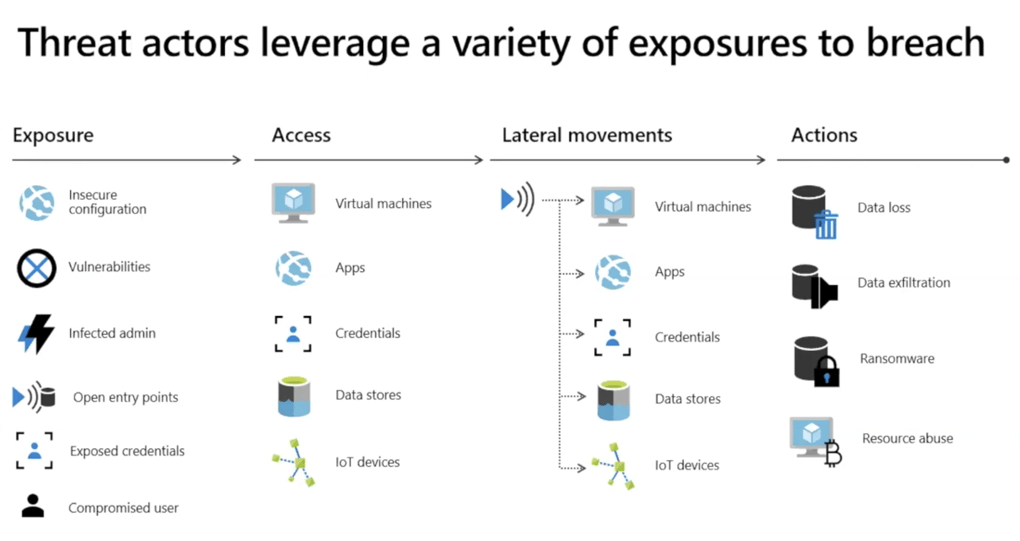
Image provided by Sans
How Cloud Security Posture Management Can Help
Cloud Security Posture Management addresses cloud security risks at their source by continuously assessing how cloud resources are configured.
Previously known as Cloud Infrastructure Security Posture Assessment, CSPM emerged in response to organizations’ growing need to securely configure public cloud IaaS and PaaS services and remediate cloud risks.
CSPM uses automation to identify misconfigurations and policy violations within cloud infrastructure. Core capabilities commonly include risk visualization and assessment, compliance monitoring, remediation guidance, and integration with DevOps workflows. CSPM can also apply cloud security best practices consistently across accounts, regions, and services.
The dynamic nature of cloud environments makes this increasingly important. Cloud resources and dependencies change continuously, and API-driven infrastructure can introduce configuration gaps that are difficult to identify through manual processes alone.
Accidentally granting public access to cloud storage is one common example. Like an unlocked house, an exposed storage bucket may allow unauthorized users to discover or access sensitive information.
Effective CSPM platforms assess encryption settings, access policies, and other configuration controls for cloud storage resources. Uptycs extends this visibility through contextual risk prioritization. By correlating vulnerabilities, misconfigurations, runtime behavior, sensitive data, and identity risks, Uptycs helps teams identify critical issues and understand potential attack paths to high-value assets.
Anwar Reddick
Director of Information
Security Greenlight Financial
The Key CSPM Capabilities: Core and Extended
The following capabilities form the foundation of CSPM:
- Automated detection and remediation: Continuously identify cloud misconfigurations and provide remediation guidance or automated response options.
- Cloud asset inventory: Maintain an up-to-date inventory of cloud resources, configurations, and relationships across accounts and environments.
- Configuration and compliance mapping: Map cloud configurations to security controls, best practices, and regulatory frameworks to simplify compliance efforts.
- Cloud storage monitoring: Assess cloud storage resources to confirm that encryption, access permissions, and other security controls are properly configured.
- Cloud change monitoring: Track and report configuration changes across public cloud environments to help maintain operational and security consistency.
Organizations may also benefit from capabilities that extend beyond posture management:
- Cloud-Native Detection and Response: Extend posture management with runtime threat detection, investigation, forensics, and blast-radius analysis across cloud services, workloads, and Kubernetes environments.
- Identity and Network Exposure Analysis: Identify excessive permissions, internet exposure, privilege escalation paths, and potential lateral movement across cloud identities and network relationships.
- Contextual Risk Prioritization: Correlate posture findings with vulnerabilities, identities, sensitive data, runtime activity, and asset criticality to identify the risks that require immediate attention.
- Compliance Monitoring and Reporting: Support standards and frameworks such as SOC 2, HIPAA, PCI DSS, CIS, and others through continuous checks and customizable reporting.
As cloud environments grow more dynamic and interconnected, combining CSPM with these broader CNAPP capabilities helps security teams move from identifying configuration issues to understanding and addressing their potential impact.
Strengthening Your Cloud Security Posture with Uptycs
Uptycs provides CSPM as part of an AI-Native CNAPP platform designed to simplify security across hybrid, multi-cloud, and container environments.
- Unified Cloud Visibility: Maintain an up-to-date inventory of cloud assets, map network topology, and understand identity, access, and resource relationships across your environment.
- Continuous Posture Monitoring: Identify cloud misconfigurations, vulnerabilities, and compliance gaps using extensible rules and continuous assessments.
- Infrastructure as Code Scanning: Detect configuration risks in Infrastructure as Code templates earlier in the development lifecycle, before they reach production.
- Contextual Risk Prioritization: Correlate vulnerabilities and misconfigurations with identities, sensitive data, runtime activity, and asset context to focus on the issues that matter most.
- Attack Path Analysis: Reveal hidden relationships and potential paths attackers could use to reach high-value assets.
- Identity and Network Exposure Analysis: Identify excessive permissions, internet exposure, privilege escalation opportunities, and potential lateral movement.
- Runtime Detection and Response: Extend posture management with runtime threat detection, investigation, forensics, and blast-radius analysis across cloud services, workloads, and Kubernetes.
- Simplified Compliance: Assess cloud environments against standards and frameworks such as SOC 2, GDPR, PCI DSS, and CIS, with customizable reporting that supports audit readiness.
- Verifiable AI-Assisted Investigation: Use Juno AI Analyst to analyze detections, accelerate investigations, and provide evidence-backed findings that teams can verify.
By bringing posture management, workload protection, contextual risk prioritization, and runtime detection together in one platform, Uptycs helps security teams reduce cloud risk and respond to threats with greater speed and confidence.
Read more about best practices and fundamentals with our FREE Cloud Strategy Guide below: