Organizations are accelerating cloud adoption while continuing to run critical workloads across on-premises systems, hybrid environments, and multiple cloud providers. This mix creates flexibility and scale, but it also makes workload security harder to manage consistently.
Traditional security tools built for static, on-premises environments often struggle to keep pace with cloud-native workflows, containerized applications, and dynamic infrastructure. Security teams need earlier visibility into vulnerabilities, malware, secrets, misconfigurations, and runtime behavior so they can reduce risk before issues spread across production environments.
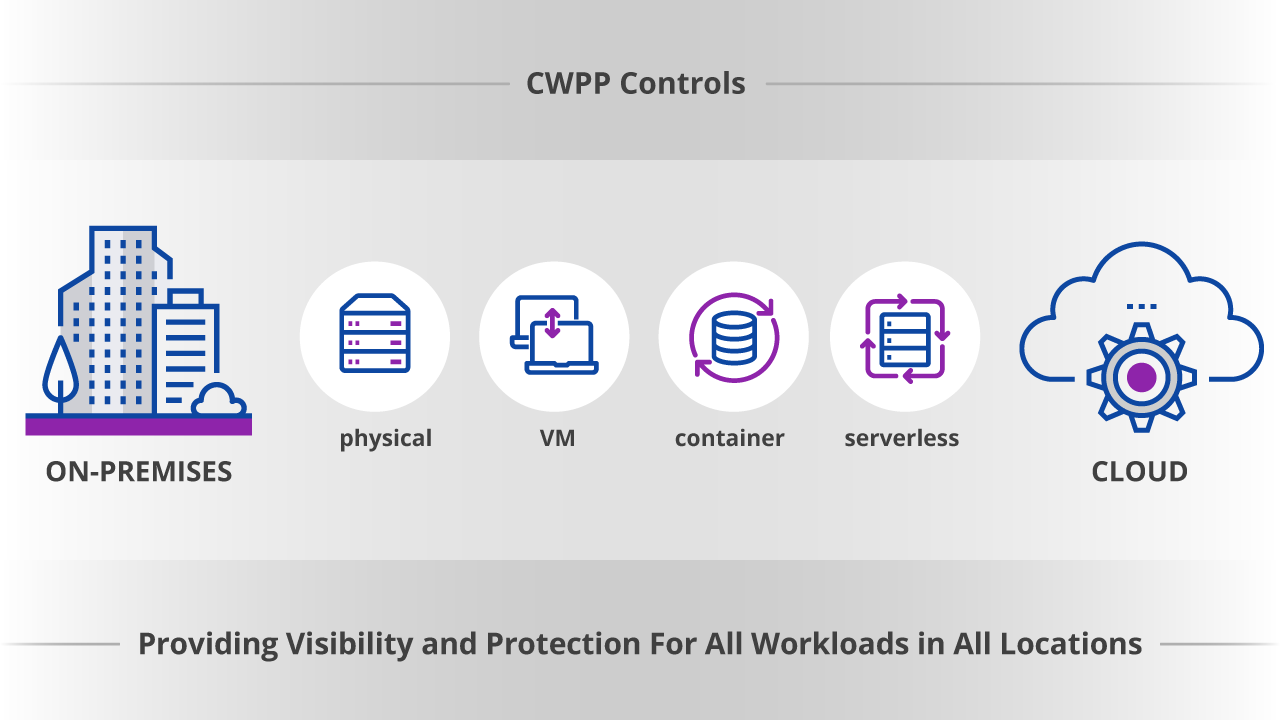
These challenges have driven a broader shift in workload visibility and protection. A cloud workload protection platform (CWPP) helps secure workloads across hybrid and multi-cloud environments, including physical and virtual machines, containers, Kubernetes, and serverless workloads.
CWPP capabilities typically include vulnerability management, system integrity monitoring, application control, behavioral detection, workload EDR, runtime protection, and anti-malware scanning. In modern cloud security programs, CWPP also works alongside CSPM, CIEM, KSPM, and other CNAPP capabilities to give teams a more complete view of risk from development to runtime.
With continuous workload visibility and runtime context, CWPP helps security teams detect suspicious activity, prioritize risks, and respond before workload issues escalate across cloud and hybrid environments.
What Does a CWPP Do?
CWPPs help security teams protect workloads across on-premises, cloud, and hybrid environments. They:
- Discover and scan workloads to identify vulnerabilities, misconfigurations, malware, secrets, and exposed software packages.
- Monitor runtime activity across processes, files, network connections, users, and services.
- Detect threats using behavioral analysis, anomaly detection, and workload telemetry.
- Prioritize risk based on workload context, exploitability, asset importance, and runtime activity.
- Support faster investigation and response by connecting workload signals with broader cloud and security context.
- Enforce security policies across development, staging, and production environments.
A CWPP gives cybersecurity teams a centralized way to understand workload risk, reduce blind spots, and respond faster without constantly switching between disconnected tools.
Grant Kahn
Director, Security Intelligence Engineering
Lookout
Layers of CWPP Controls
CWPP solutions integrate multiple layers of controls to help protect workloads across cloud, hybrid, and on-premises environments. According to Gartner, these layers include:
Hardening, Configuration, and Vulnerability Management
- The foundational layer for cloud workload protection platforms. CWPP scans workloads for vulnerabilities and prioritizes them based on severity, exploitability, and asset importance, helping organizations address the greatest risks first.
Network Firewalling, Visibility, and Microsegmentation
- CWPP tools secure workloads through segmentation of network communications, east-west traffic monitoring, and encryption of network traffic. This layer helps prevent lateral movement of threats within virtual private clouds (VPCs).
System Integrity Assurance
- CWPP continuously monitors workload integrity during pre-boot and post-boot phases, ensuring that critical files, configurations, and registries remain secure.
Application Control and Allowlisting
- By adopting a default-deny posture, CWPP blocks unauthorized executables, preventing malware execution and ensuring compliance with security policies.
Exploitation Prevention and Memory Protection
- CWPP integrates with operating system features or additional functionality to prevent exploits of known vulnerabilities, especially in allowlisted applications.
Runtime Protection and Behavioral Monitoring
- CWPP helps detect and respond to suspicious workload activity in real time, including signs of fileless malware, crypto-mining, container escapes, overprivileged user activity, and unexpected service interactions.
Server Workload EDR, Threat Detection, and Anti-Malware Scanning
- CWPP’s EDR capabilities monitor processes, file activity, and network traffic to detect malicious behaviors across workloads. In addition, CWPP enables vulnerability shielding and optional anti-malware scanning to comply with regulatory requirements.
The Benefits of Having a CWPP
CWPP solutions provide numerous benefits to organizations aiming to secure hybrid and multi-cloud environments. These include:
- Shared Responsibility Support: CWPP helps bridge gaps in the shared responsibility model by protecting workloads from attacks that bypass cloud vendor defenses.
- Unified Visibility: CWPP consolidates visibility across cloud, hybrid, and on-prem workloads, reducing blind spots that attackers may exploit.
- Proactive Threat Mitigation: With real-time detection and response, CWPP helps teams investigate and contain incidents faster, reducing potential impact.
- Cost Efficiency: Lower upfront costs, reduced hardware dependencies, and minimized operational overheads contribute to improved resource utilization and scalability.
- Compliance Assurance: Continuous compliance assessments safeguard sensitive data and streamline reporting across regulatory frameworks.
By addressing these needs, CWPP tools improve overall security posture, enhance operational efficiency, and ensure compliance with regulatory requirements.
How to Implement CWPP
To implement an effective cloud workload protection program, Gartner recommends that security and risk management leaders take the following steps:
- Design for Visibility and Control: Architect solutions that provide continuous visibility and control over workloads, regardless of their location or size.
- Adopt Zero-Trust Security Principles: Use execution models like default-deny and runtime behavioral monitoring to eliminate unnecessary risk.
- Integrate with DevSecOps Pipelines: Embed security into CI/CD workflows to protect workloads during development and runtime.
- Require API-Driven Functionality: Enable automation through robust API integrations to streamline security operations.
- Support Agentless Scenarios: Account for runtime environments where deploying CWPP agents is impractical, enabling scalable, lightweight protection.
The Future of CWPP in CNAPP
As cloud environments become more complex, CWPP is increasingly part of a broader CNAPP strategy. CWPP focuses on protecting workloads, while related capabilities help secure the surrounding cloud environment:
- Cloud Security Posture Management (CSPM): Identifies misconfigurations and posture risks across cloud services.
- Cloud Infrastructure Entitlement Management (CIEM): Helps manage permissions, identities, and excessive access.
- Kubernetes Security Posture Management (KSPM): Extends posture visibility into clusters, workloads, and containerized environments.
- Cloud Detection and Response (CDR): Connects workload, cloud, identity, and runtime signals to detect and investigate threats.
Together, these capabilities help security teams move from isolated alerts to a more unified view of cloud risk. In a modern CNAPP, CWPP remains essential because it provides the runtime workload context needed to understand what is actually running, what is vulnerable, and what may require immediate action.
This is also where AI-assisted investigation can add value. When workload telemetry, cloud context, and detection data are unified, tools like Juno AI Analyst can help security teams ask better questions, validate findings faster, and prioritize remediation with more confidence..
Learn more about cloud security and CWPP
- Cloud Workload Security: What You Need to Know (Cloud Security Alliance)
- Cloud workload protection platform security benefits, features (TechTarget)
- Cloud Native Security White paper (Cloud Native Computing Foundation)
Continue learning how Uptycs helps secure cloud workloads from development to runtime.